
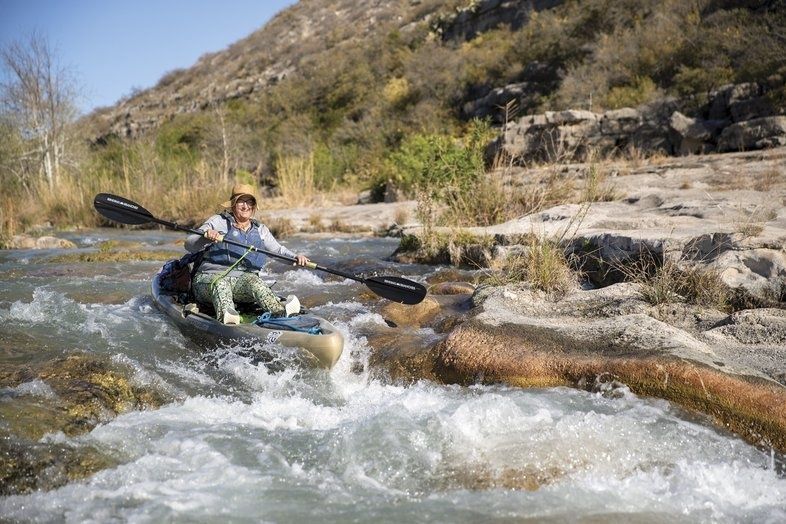
Unlocking the Visual Language of Whitewater
Moving water can look deceptively uniform. A rapid may appear to be one continuous rush, yet its surface is constantly reporting what lies beneath: changes in depth, submerged rocks, converging currents, recirculation, and pressure against the riverbed. Without trained observation, even an experienced paddler can mistake a smooth tongue for a safe route or read a foamy patch as harmless turbulence. The river is not random, but its patterns are easy to miss when attention narrows to the next wave.
The essential mindset shift is to stop treating current as an opponent and start decoding it as information. Before launching, and whenever the river opens into a new rapid, scan from upstream and identify the main flow, slower margins, eddy lines, visible obstacles, and possible exits. Early detection gives you time to choose a line, build speed, adjust your angle, or walk the feature entirely. For paddlers refining their broader river reading skills, the goal is not to memorize every feature, but to recognize how water behaves before the boat reaches it.
Anatomy of a River and Reading Current Gradients
River orientation is always described while facing downstream. River-left is the left bank from that position, and river-right is the right bank. This convention matters when a guide calls a line, a rescue location, or an obstacle during a fast descent. Hydrology provides the practical foundation: gradient, channel shape, depth, bedrock, boulders, and banks all influence how water accelerates and where pressure builds. A straight, constricted channel generally produces faster flow, while broad shallow margins and irregular shorelines often slow the water.
In the center of a clean channel, downstream flow may appear smooth and organized, but speed changes with depth and friction. Water near the bed and banks loses energy through contact, creating slower layers and often a deceptive calm along the shoreline. Rapids develop when a change in gradient, channel direction, or underwater structure disrupts that smoother flow. Use color and texture as early clues, then confirm them with the shape of the current.
- A darker, smoother tongue often indicates deeper, faster water, though it still requires checking for hidden features.
- Broken, glassy seams can mark converging currents or the edge of an eddy.
- Flat water beside a rushing center may be slow shoreline water rather than a safe escape route.
- V-shaped lines pointing downstream commonly identify the deepest or most continuous route between obstacles.
Decoding Hydraulics and Hidden Recirculating Holes
A hydraulic forms when water pours over an obstacle, such as a rock ledge, shallow shelf, or low-head dam, then curls back toward the obstacle at the surface. Beneath that surface circulation, water is usually moving downstream and eventually flushing away. This creates a powerful trap. A boat or swimmer can be carried back toward the pour-over repeatedly, even while the surrounding river continues downstream. Artificial low-head dams are especially hazardous because they can look small and harmless while producing a broad, persistent backwash.
Visual inspection should focus on the relationship between the pour-over, downstream current, boil line, and foam pile. A friendly surf wave usually has a clear downstream shoulder or accessible side, a defined face, and enough energy to carry the paddler away if balance is lost. A retentive hole may look deceptively quiet, with a smooth or “frowning” lip and a boil line positioned close to the obstacle. Aeration can make water less supportive, while a long foam pile may conceal the direction of escape. The farther the boil line extends from the pour-over, the more serious the feature becomes. If it reaches beyond roughly half a boat length, walking around is often the prudent decision.
| Visual feature | Likely meaning | Safer response |
|---|---|---|
| Clean downstream tongue | Continuous current with a possible route through the feature | Enter with control and identify the exit before committing |
| Wide foam pile and weak downstream shoulder | Potentially retentive hydraulic | Scout from shore and avoid unless the line is well within skill level |
| Boil line far below the drop | Strong recirculation with a longer trap zone | Portage or choose a clearly flushing edge |
| Low, smooth ledge or dam | Possible low-head hydraulic | Stay well away and locate a safe portage |
If a swimmer is caught, fighting directly against the upstream surface flow usually wastes energy. The commonly taught escape concept is to move toward the edge or toward the bottom current, depending on the hydraulic and the swimmer”s position. Staying active, reaching for downstream-moving water, and angling toward a weaker corner may help. Curling into a compact position can help a swimmer descend into the stronger downstream flow beneath the surface, but this is an emergency technique, not a substitute for prevention. Panic, prolonged breath-holding, and exhaustion rapidly reduce the chance of a controlled exit. Group paddling, throw bags, and trained rescue systems provide far better options than an isolated self-rescue attempt.
Deadly Obstacles from Strainers to Pillow Rocks
Strainers are among the most dangerous river hazards because water passes through branches, roots, fencing, or fallen timber while a person does not. Sweepers, which extend from the bank into the current, can push a boat toward the obstruction or catch a paddler who drifts sideways. The surface may show only a few branches, while a submerged root ball or tangled trunk creates a much larger trap below. The correct response is early avoidance. Paddle decisively toward open water while there is still room to maneuver, and never rely on grabbing a branch as a last-second solution.
Rocks provide different information. Water piling against the upstream face creates a pillow, often visible as a smooth, pressured mound. A substantial pillow may indicate a large obstruction, but it is generally preferable to a sieve or undercut bank, where water disappears beneath a rock shelf and can pin equipment or a person. Before entering a rapid, stop at a high upstream vantage point and inspect the complete sequence rather than only the first wave.
- Identify every visible tree, branch cluster, undercut bank, and narrowing in the channel.
- Trace the current downstream of each obstacle to find the actual escape route.
- Look for downstream Vs, diagonal waves, boil seams, and water disappearing beneath rocks.
- Confirm whether the intended line ends in an eddy, open recovery water, or another hazard.
- Assign a spotter and establish communication before committing to a difficult rapid.
- Wear an appropriate flotation device and carry rescue equipment suited to the river and group.
Mastering Ferry Angles and Crossing Strong Eddy Lines
A ferry is a controlled lateral crossing that uses the current to move a boat across the river without surrendering downstream position. The hull angle is the key. Pointing directly across may allow the current to spin the boat, while pointing too far upstream can stall forward momentum. A modest upstream angle, combined with enough speed to maintain control, lets the current push the boat sideways as the paddler drives forward. The faster the current, the more decisive the angle and edge control must be.
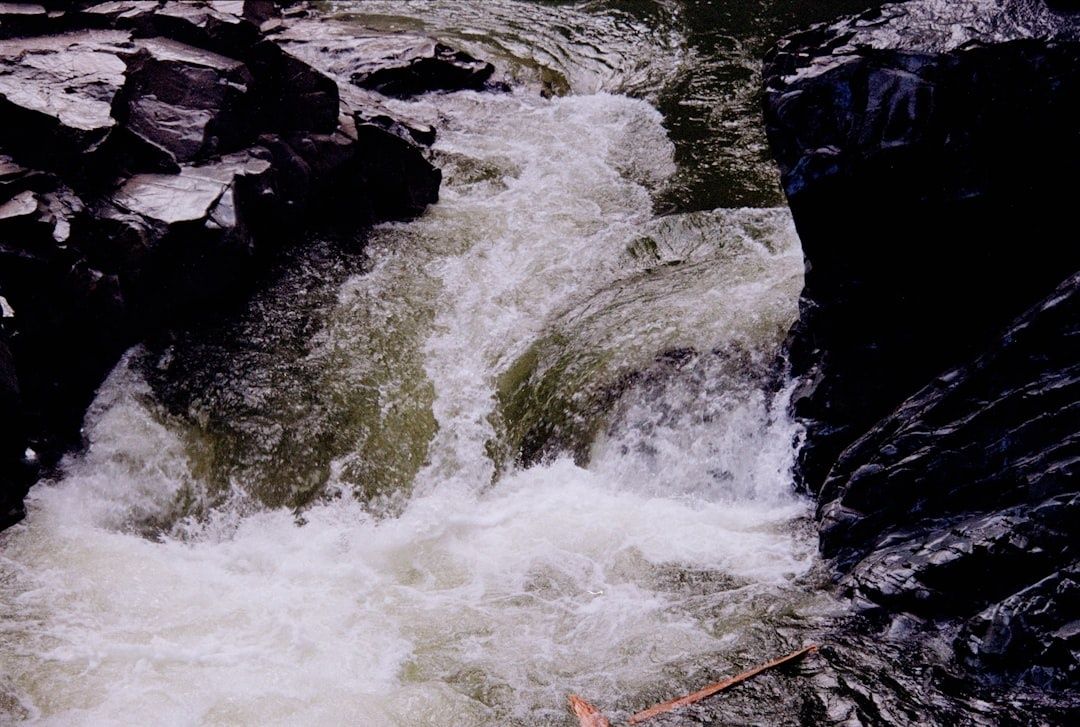
Eddy lines demand particular attention because they separate downstream current from water circulating upstream along the bank. Crossing one creates a sudden change in pressure beneath the hull. Kayakers may need a strong downstream or upstream edge, depending on the direction of travel, while canoeists and SUP paddlers must keep the craft stable without allowing the current to catch the upstream side. On a SUP, a low stance, bent knees, and a staggered or tripod position lower the center of gravity. Raise the leading edge slightly, commit to the crossing, and use the paddle as an active brace rather than a passive support.
- Scout the landing eddy or opposite bank first, making sure it is large enough for recovery.
- Enter the current with speed and establish a steady forward stroke.
- Set a controlled upstream angle, usually modest rather than extreme, according to current strength.
- Keep the boat moving forward while allowing the current to provide lateral travel.
- As the bow reaches the eddy line, maintain the angle and prepare for the change in water pressure.
- Use an appropriate edge or weight shift, keep the paddle ready for support, and avoid abrupt corrections.
- Once across, turn deliberately into the eddy or toward the intended landing rather than drifting sideways.
A clean ferry depends more on timing and commitment than on force. Hesitation at the eddy line often lets the current rotate the boat broadside, which increases the chance of a flip or an unintended downstream slide. Practice first in broad, forgiving eddies, then progress to stronger seams under supervision. Repeated drills teach the body to recognize pressure changes before the mind has time to analyze them. That instinct is valuable, but it must remain connected to current conditions, visibility, water temperature, and the capabilities of the entire group.
Transform Your River Vision into Instinctive Water Confidence
With practice, surface cues begin to form a readable sequence. A smooth tongue suggests a line, a dark crease hints at depth, a broken seam marks a current boundary, and a foam pile raises a question about recirculation. The strongest paddlers do not simply react quickly; they make decisions before the hazard becomes immediate. They keep scanning downstream, maintain an exit plan, and treat every rapid as a changing system rather than a fixed obstacle course.
Confidence on moving water grows through continuing education, conservative scouting, and disciplined gear checks. Wear properly fitted flotation, use a helmet where impact hazards exist, dress for immersion, inspect boats and leashes, and carry communication and rescue equipment appropriate to the environment. Never run unfamiliar whitewater alone, and do not enter strong current to attempt a rescue unless properly trained and equipped. Read the river from shore, respect weather and flow changes, and choose a route that leaves room for correction. When subtle textures become meaningful signals, dynamic water becomes clearer, decisions become calmer, and every launch begins with the preparation that makes adventure safer.