

Reading the Skin of the Water
The transition from a deep channel into a shallow flat is often felt before it is fully seen. The hull rises slightly, the water loses its dark blue depth, and the surface begins to show a different texture. Ahead may be a pale green shimmer, a patch of rippled sand, or a broad sheet of bright water that looks harmless until the skeg, propeller, paddle, or hull meets the bottom. This is the moment when ordinary boat handling becomes shallow-water seamanship. Speed, trim, visibility, wind, current, and bottom type all matter at once.
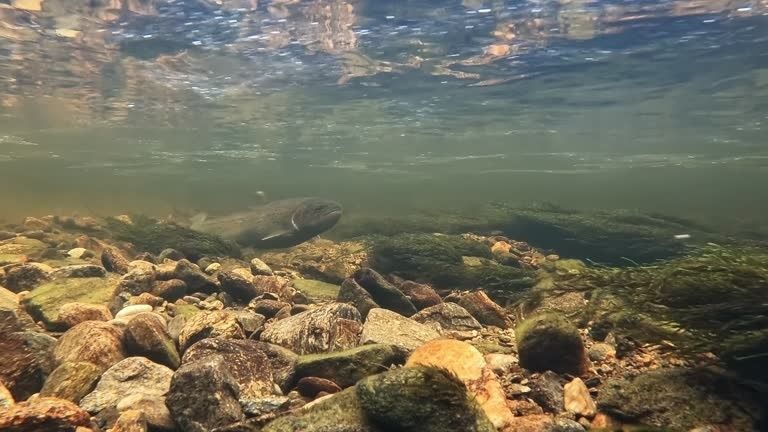
These flats are not empty space. Seagrass meadows, oyster areas, gravel beds, mud plains, and other benthic habitats provide nursery grounds, feeding areas, shelter, and water-quality benefits that support fish and wildlife as well as coastal economies. Protecting them does not require abandoning exploration or flats fishing. It requires replacing last-second reactions with practiced observation, controlled propulsion, and a willingness to let the water set the pace. The goal is practical and straightforward: read the surface early, keep machinery from scouring the bottom, and use silent movement whenever conditions allow.
The Anatomy of Benthic Damage
A propeller strike can do more than leave a temporary mark. When a lower unit enters shallow sediment, the rotating blades can shear seagrass leaves, sever rhizomes, and excavate a narrow trench. Repeated passages widen that scar and remove the rooted structure that stabilizes the seabed. Fine sediment then becomes easier to resuspend, reducing water clarity and potentially burying nearby vegetation. Recovery depends on the species, water quality, season, depth, and frequency of disturbance, so a visible line across a flat should be treated as a warning, not proof that the habitat has already healed.
Prop wash adds a second form of damage. A high-thrust propeller accelerates water downward and aft, creating turbulence that can lift fine particles and undermine grass roots even when the propeller does not visibly strike the bottom. Hulls can also scour soft ground when a vessel settles onto a flat, while paddle blades and push poles can disturb small areas of gravel, shell, or mud if they are repeatedly planted with force. In the Florida Keys, a government assessment mapped thousands of impact polygons, including propeller scars, groundings, anchoring damage, and wake erosion. The assessment reported that total mapped impact increased from 30,050 acres in 1995 to 56,950 acres in 2015, while combined moderate and severe impacts doubled to 30,943 acres. The figures show why individual decisions matter across heavily used waterways.
Current habitat-mapping work is designed to locate scar hotspots, compare damaged and undamaged areas, and help managers balance conservation with recreational access. The NOAA Nature Coast seagrass project is one example of that effort. For boaters, the practical lesson is to treat a clear bottom as living infrastructure. Avoid turning sharply on a flat, do not power through a grounded hull, and move to deeper water before increasing throttle.
- Propeller scars can cut through roots and rhizomes, not just leaves.
- Prop wash can destabilize sediment even when the propeller does not visibly touch bottom.
- Hull grounding can crush vegetation and compact or displace the upper sediment layer.
- Paddle and pole strikes should be light and controlled around gravel beds, shell habitat, and rooted plants.
- Anchors and chains should never be dragged across a shallow habitat.
Sight-Reading Depths and Color Gradients
Surface color is a useful first estimate, but it is not a depth gauge by itself. Deep water commonly appears dark blue, blue-green, or charcoal because less light returns from the bottom. As depth decreases, water may shift toward turquoise, green, tan, or silver, depending on sunlight, suspended sediment, algae, and the material below. A dark patch inside a pale flat may indicate a hole or channel, while a uniform white or milky area can signal very shallow water, exposed sand, wave tops, or a reflective shell bottom. The same location can look different under cloud, glare, or a low sun, so visual interpretation must be combined with charts, soundings, tide information, and a conservative speed.
Polarized sunglasses can reduce glare and reveal bottom contours, but they do not eliminate optical traps. Look through several angles rather than staring straight ahead, and compare the water immediately beside the boat with the surface farther along the route. Wind texture is another valuable clue. A smooth, glassy patch may mark a lee or a change in depth, while darker ripples can conceal a shallow ridge. Wind against current can create short, confused waves over a shoal, a condition documented in the Strait of Juan de Fuca where strong winds, tidal flow, and shallow banks can combine to produce steep, irregular seas. If a shoal is surrounded by deep water, do not assume the surrounding depth guarantees a safe crossing. Water movement can make the shallow area rougher than the channel.
Use a layered scan before committing to a flat. Check the chart and tide stage, identify the intended exit route, then visually confirm the water ahead. Keep the bow pointed toward the safest visible gradient rather than following a bright reflection or another boat’s track. A track left by a previous vessel is not proof of adequate depth, especially if its draft, trim, or route differs from yours.
| Surface appearance | Possible bottom or condition | Practical response |
|---|---|---|
| Dark blue or deep blue-green | Deeper channel, hole, or strong shadow | Maintain a deliberate lookout for channel edges and current lines |
| Clear turquoise or medium green | Moderate depth with visible bottom | Reduce speed and identify the bottom type before entering |
| Pale green or tan | Shallow sand, mud, grass, or shell flat | Prepare to trim, idle, drift, pole, or turn back |
| White, silver, or highly reflective | Very shallow water, breaking surface, glare, or exposed bottom | Do not accelerate; approach only with confirmed depth and a clear route |
| Dark rippled band across lighter water | Wind line, current seam, drop-off, or submerged ridge | Cross slowly and reassess the bottom immediately beyond it |
Engine Trim and Throttle Adjustments for Thin Water
Enter shallow water at the lowest speed that still gives reliable steering and control. Find the boat’s true idle behavior in open water before approaching a flat. Some engines move a boat faster than expected at idle, while others lose steering authority if the throttle is reduced too far. A high bow wave is not a sign of efficient shallow-water travel. It usually means the hull is pushing water, increasing wake energy, and sending turbulence across the bottom. The safest setting is the one that preserves control while minimizing wake and prop wash.
Outboard and sterndrive trim systems require deliberate adjustment because the correct setting depends on hull design, load, engine position, bottom type, and actual depth. Trimming up can lift the propeller and lower unit away from the sediment plane, but excessive trim may reduce cooling-water flow, steering control, or propeller bite. Monitor the engine’s cooling-water indicator, listen for ventilation, and follow the manufacturer’s operating guidance. Local restrictions may also apply. Before entering a protected area, review NOAA shallow-water habitat guidance and check current sanctuary rules, marked pole-troll zones, and no-motor areas.
- Slow to idle or the minimum controlled speed before the water changes color.
- Lift the engine gradually while keeping enough propeller engagement for steering and cooling.
- Keep the bow aligned with the deepest visible gradient and avoid abrupt turns.
- If the depth drops suddenly, ease off power immediately rather than trying to plane across the flat.
- Shift to neutral when appropriate, assess the bottom, and use a pole or paddle if continued travel is safe.
- If the hull touches bottom, stop the propeller, check for grounding, and do not power free through vegetation or soft sediment.
- Once deeper water is confirmed, lower the engine to its normal running position before accelerating.
Silent Transits Using Push Poles and Drifting
Non-motorized movement gives the operator finer control and removes the most damaging source of turbulence. A push pole should be planted in firm, open bottom when possible, with pressure applied smoothly rather than driven hard into vegetation. Keep the pole angle low enough to maintain balance, and recover it without dragging across the seabed. In a kayak or canoe, short paddle strokes beside the hull are more precise than forceful strokes that plunge deep into a grass bed. A paddle leash, personal flotation device, and stable stance or seated position are essential, particularly when wind or current makes the boat turn.
Drifting can be even gentler when the route and conditions permit. Before releasing power, identify where the wind and tide will carry the boat, then calculate a landing point that keeps the hull away from grass edges, oyster structure, and shallow corners. Use a stake-out pole only where the bottom can accept it without damaging rooted habitat, and set it vertically with minimal force. A shallow-water anchor should be deployed carefully, with enough scope and holding capacity to prevent dragging, but without allowing chain or rope to sweep across the bottom. If the forecast, visibility, current, or traffic makes a silent transit unsafe, retreat to deeper water rather than forcing the crossing.
- Choose a route with visible open bottom and a clear exit.
- Use light pole or paddle strokes, avoiding repeated planting in rooted vegetation.
- Drift only after checking wind direction, tidal flow, traffic, and recovery options.
- Set anchors and stake-out poles vertically, then retrieve them without dragging.
- Wear a properly fitted personal flotation device and keep communication equipment accessible.
Leave the Shoals Pristine for the Next Tide
Good shallow-water seamanship combines three habits: situational awareness, visual depth reading, and disciplined trim control. Scan the water before entering, interpret color and texture in changing light, reduce speed early, and keep prop wash away from the sediment plane. Use charts and local rules as the foundation, then let the surface confirm whether the planned route is suitable. When uncertainty grows, the correct maneuver is not a faster pass. It is a pause, a turn, or a quiet retreat.
There is a particular satisfaction in crossing a fragile flat without a churned wake, a bent propeller, or a scar behind the stern. The fishery benefits, the next tide finds the habitat intact, and the operator gains a skill that transfers to every coast, marsh, lake, and tidal river. Practice these drills in clear, forgiving conditions: slow before the color changes, trim with restraint, identify the drift, and switch to silent propulsion when the bottom demands it. Freedom on shallow water lasts longest when every passage leaves the shoal ready for the next one.